Outdoor Furniture: Sending an Inquiry That Gets an Accurate Quote
An inquiry with a clear item list is easier to follow than an inquiry with a loose collection of phrases. This article shows how to write one for outdoor furniture.
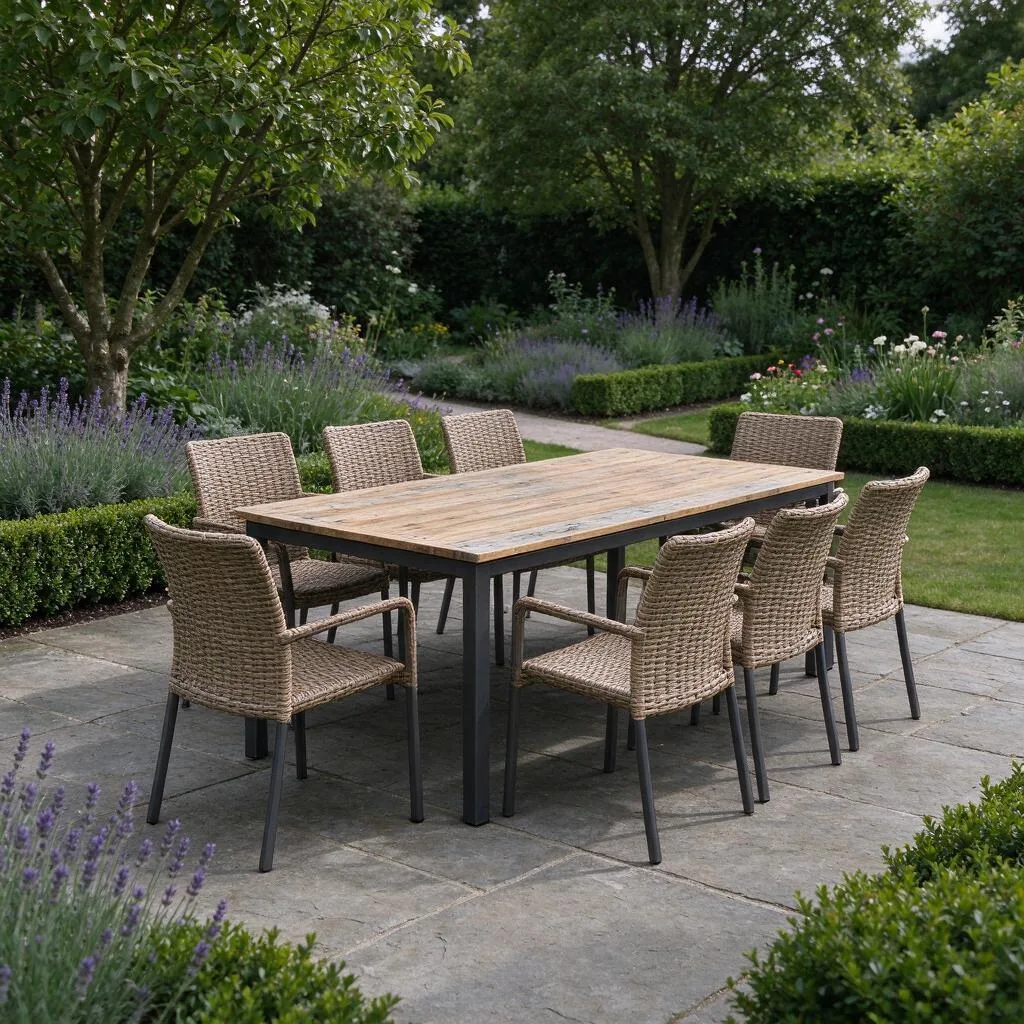
What a clear item list looks like
A clear item list names each item in plain words, groups the items under headings, and ties each item to the use planned for it. The list reads from top to bottom without a detour: the families first, the groupings next, the items under each grouping, and the use beside each item. A reader following a list of that shape sees the whole order in one view, and the headings explain the structure without further notes.
A loose collection of phrases reads differently. Phrases copied from search results sit side by side with no grouping, no headings, and no use notes, and the reader has to sort them before the order can be understood. Sorting takes time, and sorting by guesswork introduces mistakes. The grouped list removes that work by doing the sorting before the inquiry is written, in the buyer's own words.
The difference between the two shapes is not a matter of length. A short list with no grouping can be harder to follow than a longer list with clear headings, because the headings carry the meaning that the short list leaves out. Write the headings first, then the items under them, and the list will explain itself as it is read.
Grouping by use and by setting
Group the outdoor furniture list by use first, then by setting within each use. Each group gets a heading that names the use and the setting together, and each item gets a line of its own under the heading. Where the list covers tables and chairs, the table and chair items for one use sit together under the same heading, so the relationship between them stays visible.
Where the list covers more than one grouping, name the grouping for each item beside the name, so no item floats free of its group. An item with no grouping beside it is an item a reader has to place by guesswork, and guesswork is where mistakes enter. A grouping named beside each item keeps every item anchored to the plan.
- The families covered, named at the top of the list
- The groupings, with a heading for each use and setting
- The items under each heading, named in plain words, one per line
- The use planned for each item, written beside the name
- The grouping for each item, named beside the name where the list covers more than one grouping
The points that frame the list
An inquiry frames the item list with four points: the families covered, the target quantity range, the destination market, and the points to ask about. The families go first, so the reader knows the scope of the list before reading it. The quantity range and the destination market go with the list, above the headings, so they are read as covering the whole order. The points to ask about, MOQ, lead time and certificate copies, go in the same inquiry, so every point of the order stays in one place.
Colour, size and shape requirements belong in the inquiry as points to confirm, written beside the items they belong to. A requirement written beside its item is clear; a requirement written at the end of the inquiry, with no item beside it, is easy to misread. Where a requirement covers a whole group, write it under the group heading, so the reader sees that it covers the group.
Writing the inquiry in one pass
Write the inquiry in one pass, from the grouped list, in the same order as the list. Start with the families, then the quantity range and the destination market, then the grouped items with their headings, then the points to ask about. Writing in one pass keeps the order of the inquiry matched to the order of the list, and a matched order is easier for a reader to follow than an order rearranged after the fact.
Read the inquiry back as a reader would before sending it: does each item carry its use, does each group carry its heading, does the quantity range cover the whole order, and is every requirement tied to the item it belongs to? A read-back of that kind catches the loose ends that a first draft leaves behind, and it takes only a few minutes for a list of any length.
Filing the papers together
Keep a copy of the grouped list with the inquiry, and keep the inquiry with the papers that arrive later, filed together under the same heading. A buyer who keeps those papers together can check, at any point, whether the list that went out matches the list being discussed. Keep any confirmation received with the quote in the same file, so the inquiry, the list and the papers that arrive later stay together.
The same habit helps when an order is revisited after a gap. A grouped list, with the use notes beside each item and the headings carrying the structure, reads clearly even after time has passed, because the reasons for the grouping are written into the list itself. A loose collection of phrases reads less clearly after a gap, because the phrases that held it together may no longer carry the same meaning.
A second read before sending
Read the inquiry once more with fresh eyes before sending it, or hand it to a colleague for a read. Ask whether each item carries its use, whether each group carries its heading, and whether the quantity range and the destination market read as covering the whole order. A fresh reader spots a requirement floating free of its item, a grouping named for one item and missing for the next, and a heading that repeats another heading word for word. Fix each point in the draft, and send the inquiry only when the read-back finds nothing left loose. The habit takes a few minutes, and it keeps the filed papers tidy: the list, the inquiry and the papers that arrive later all share the same headings.
Related pages
Send an inquiry
Name the outdoor furniture items and the target quantity range in the inquiry form, and ask about MOQ, lead time and certificate copies.